[ad_1]
**Whistle While They Work: An Analysis of Referee Communication in Soccer**
In the world of soccer, where passions run high and the pace of play often borders on frenetic, one critical aspect that maintains the flow and integrity of the game is effective referee communication. As arbiters of fairness, safety, and sportsmanship on the pitch, referees rely on a blend of verbal and non-verbal cues, technology, and teamwork to convey their decisions and maintain control of the match. This article delves into the mechanisms of referee communication within soccer, exploring its implications for the game, the players, and the fans.
**The Language of the Whistle**
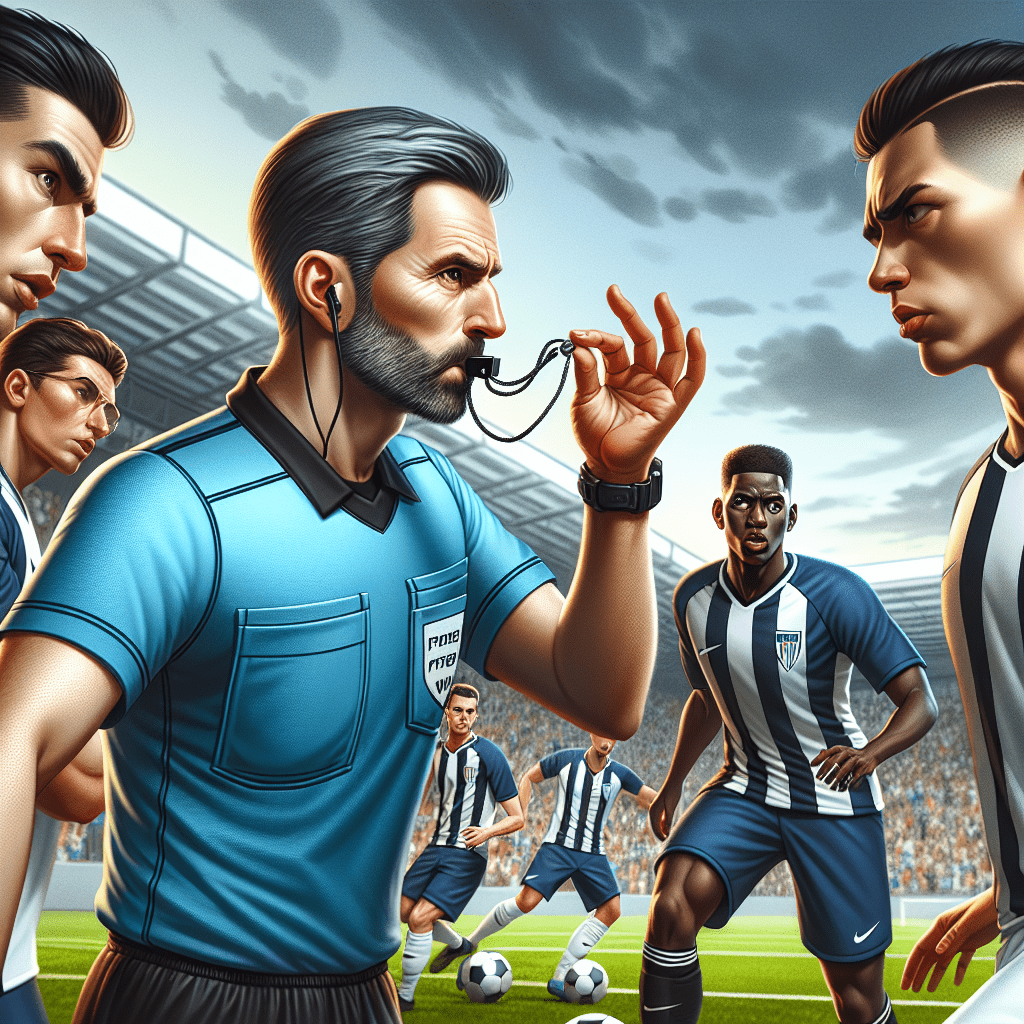
At the heart of referee communication is the whistle – a simple, yet powerful tool. It commands attention, punctuates the action, and conveys decisions. The manner in which a referee blows the whistle can communicate the severity of a foul or indicate the urgency with which they are managing a situation. Short blasts might indicate a minor infraction, while a long, drawn-out whistle can signify a more serious infringement or pause the game for an injury.
**Body Language and Gestures**
Referees also use a sophisticated system of body language and hand gestures to communicate their rulings. These non-verbal signals help clarify their decisions for players, coaches, and fans alike. For instance, pointing in a direction signals which team has possession following a foul or out-of-bounds play. The use of card signals – yellow for caution and red for ejection – is universally understood. Beyond the basics, gestures such as the advantage signal (arms extended forward) allow referees to communicate more nuanced decisions, fostering a smoother flow of play.
**Verbal Communication**
Although less visible to the fans, the verbal communication between referees and players is crucial to the game’s management. Referees often explain their decisions, provide warnings, or manage disputes through direct conversation with the players. This dialogue, although sometimes contentious, can also promote a mutual understanding and respect between the players and the referee. Furthermore, referees communicate with each other verbally, using microphones and earpieces to discuss decisions and ensure their rulings are consistent and accurate.
**The Role of Technology**
In recent years, technology has become an integral part of referee communication in soccer. Systems like the Video Assistant Referee (VAR) and goal-line technology enhance decision-making accuracy, allowing referees to review and communicate their decisions with greater confidence and transparency. Through signals and screens, referees interact with technology to confirm goals, penalties, and other contentious moments in a game, bringing a new dimension to their communication toolkit.
**Teamwork Among Officials**
Effective communication is not just about the central referee. Assistant referees, the fourth official, VAR operators, and even match delegates are part of a broader team working in concert. Signals, flags, and intercom systems create a network of communication that spans the field of play and beyond. This collaborative effort ensures that the game is fair, the rules are applied uniformly, and the welfare of the players is always a priority.
**Training and Development**
Refining the art of communication is an ongoing process for referees at all levels of soccer. Governing bodies and referee associations worldwide emphasize communication skills in their training programs. Through workshops, simulations, and reviews of match footage, referees continuously hone their ability to convey their decisions clearly and manage the dynamic environment of a soccer match effectively.
**The Impact of Communication on the Game**
Effective referee communication has a profound impact on the game of soccer. It can reduce misunderstandings and conflicts, ensure the smooth flow of play, and enhance the overall fairness and enjoyment of the game. Players who understand the reasons behind decisions are more likely to accept them, reducing dissent and fostering a more respectful atmosphere. Fans, too, benefit from clear communication, as it helps them understand the nuances of the game and the challenges referees face.
**FAQ Section**
**Q: How do referees communicate with players who don’t speak the same language?**
A: Referees often use universal gestures, body language, and basic phrases in English or another widely understood language. The universal nature of soccer’s disciplinary signals (e.g., cards, directional gestures) also facilitates communication across language barriers.
**Q: Can players challenge a referee’s decision?**
A: While players can express their views to a referee, the referee’s decision is final. Disputing a referee’s decision can lead to disciplinary action. In professional leagues with VAR, certain decisions (such as penalties, red cards, or mistaken identity) can be reviewed and potentially overturned.
**Q: How are referees trained in communication?**
A: Referee training programs include modules on effective communication, covering both verbal and non-verbal techniques. Training also involves simulations and review of match situations to practice and improve communication skills.
**Q: What happens if there’s a technology failure with systems like VAR?**
A: If there’s a technical failure, referees revert to making decisions without technological assistance, relying on their training and the input of their fellow officials. The integrity of the game is preserved through the referees’ skills and teamwork.
**Q: How can fans learn to interpret referee signals?**
A: Fans can learn to interpret referee signals by watching soccer regularly and referring to resources published by soccer governing bodies, such as rulebooks and educational materials. Many broadcasters and commentators also explain referee signals and decisions during matches, providing valuable insights.
**Conclusion**
In the dynamic and passionate realm of soccer, effective referee communication is a cornerstone of the game’s integrity and appeal. Through a combination of traditional signals, verbal exchanges, and modern technology, referees maintain the balance between control and fluidity, ensuring that soccer remains a fair, safe, and enjoyable spectacle for all involved. As the game evolves, so too will the methods and technologies supporting referee communication, continually enhancing this vital aspect of the world’s most beloved sport.
[ad_2]